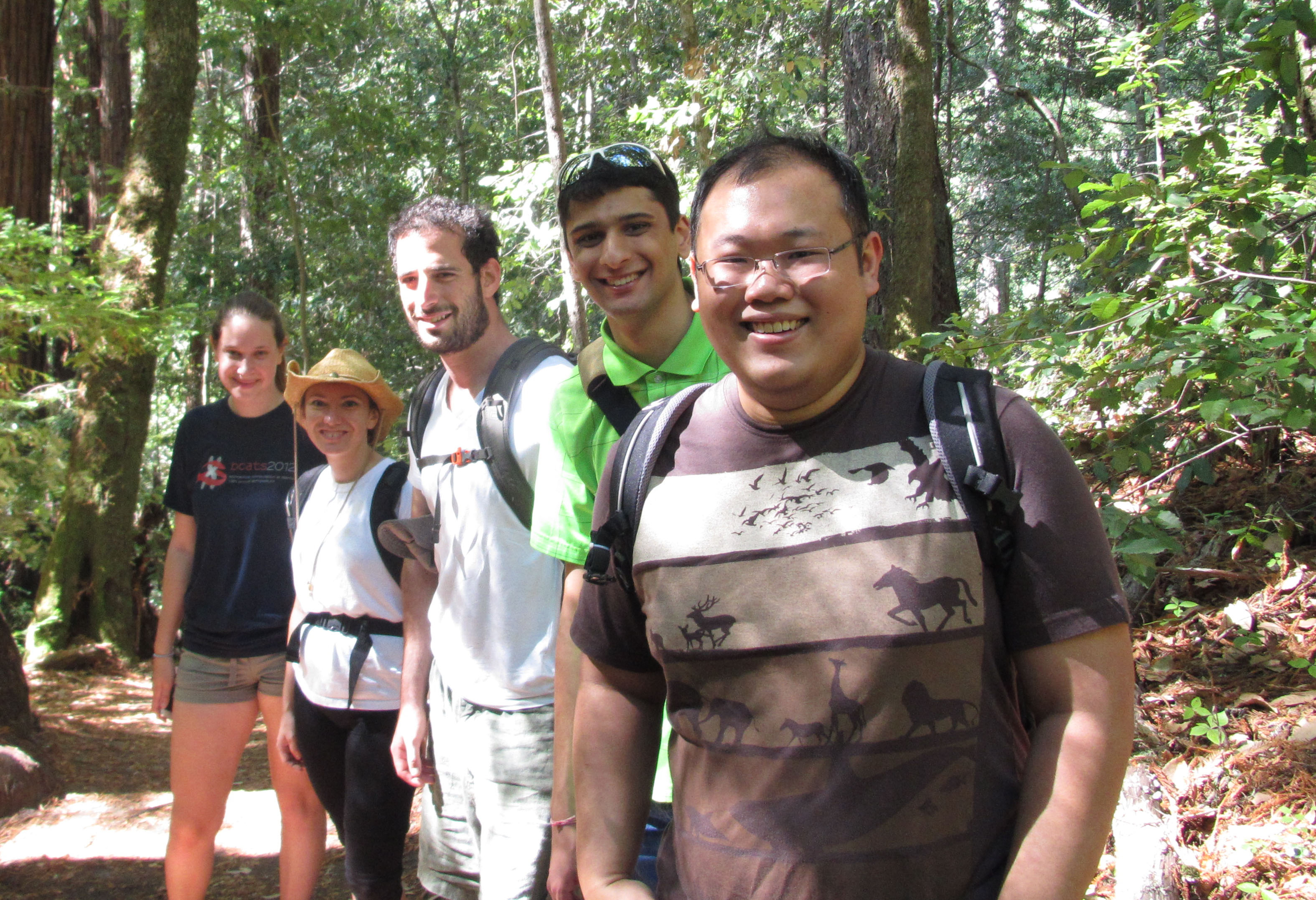
Members. Graduate student and postdoctoral members of the lab
have received their previous academic training in a variety of fields,
including anthropological genetics, biochemistry, bioinformatics,
biological anthropology, biology, chemistry, computer science, ecology
& evolution, genetics, human biology, human genetics, mathematics,
molecular & cellular biology, physics, psychology, statistics, and
systems science & engineering. Past experience in both a mathematical
field and a biological field is common. Lab alumni
now hold faculty positions at
Aarhus
University, Duke
University,
Florida Atlantic University,
Hebrew University of
Jerusalem,
Holon Institute of Technology,
Huazhong University of Science
and Technology,
Instituto Tecnológico
Autónomo
de México,
Natural History Museum of
Paris, Pennsylvania State
University,
Singapore Polytechnic,
Tufts University,
University of
Idaho,
University of
New Mexico, University of
Pisa,
University of Southern California (1),
University of Southern California
(2),
Uppsala
University, and
University of Texas
M. D. Anderson Cancer Center, and industry positions in
bioinformatics, computational biology, data science, and software.
Lab members contribute to a warm and interactive
intellectual atmosphere with a strong commitment to rigor and training in
mathematical, statistical, and computational approaches to biology.
Members enter the group with a high degree of independence, motivation,
and training; undergraduates and early-stage graduate students are often
paired with senior members for the initial stages of their work in the
lab. Typical research profiles for graduate students and postdocs include
mathematical theory, development of statistical methods, and data
analysis, and may include both individual and team-oriented projects. Lab
members often have considerable autonomy in working to devise their
project portfolios.
As part of their experience in the lab, members of
the lab strive to promote interconnectedness among academic disciplines,
clear and concise scientific writing, informative presentation of
scientific results, rigor and thoroughness in scientific work, support and
mentorship for junior members, and openness in disseminating the products
of their research. We seek to bring in new members who share our research
interests and our scientific values.
Read more about joining the lab...
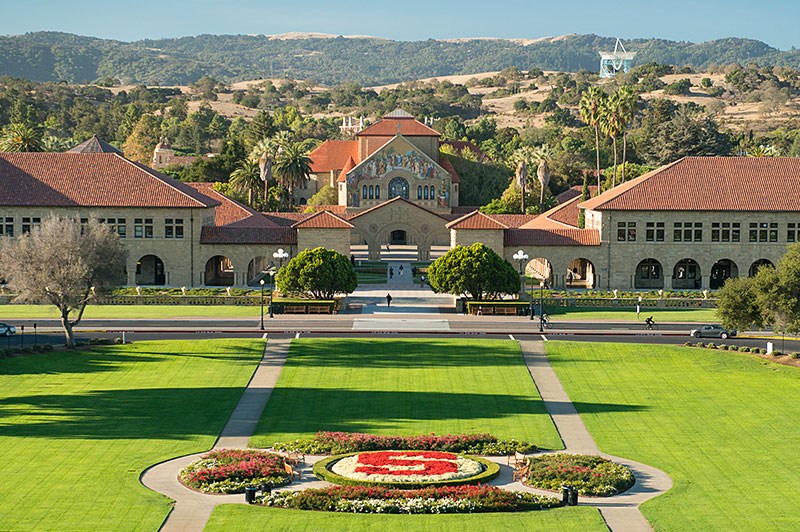
Environment. Stanford has a rich community of researchers
with interests related to those of the lab. Our location is a short
distance from the main quad, the math, statistics, and computer
science departments, the Li and Ma Science Library, the Clark Center
and Bio-X, Stanford University Medical Center, the Cantor Arts
Center, and Bytes Cafe.
Read more about the lab environment...